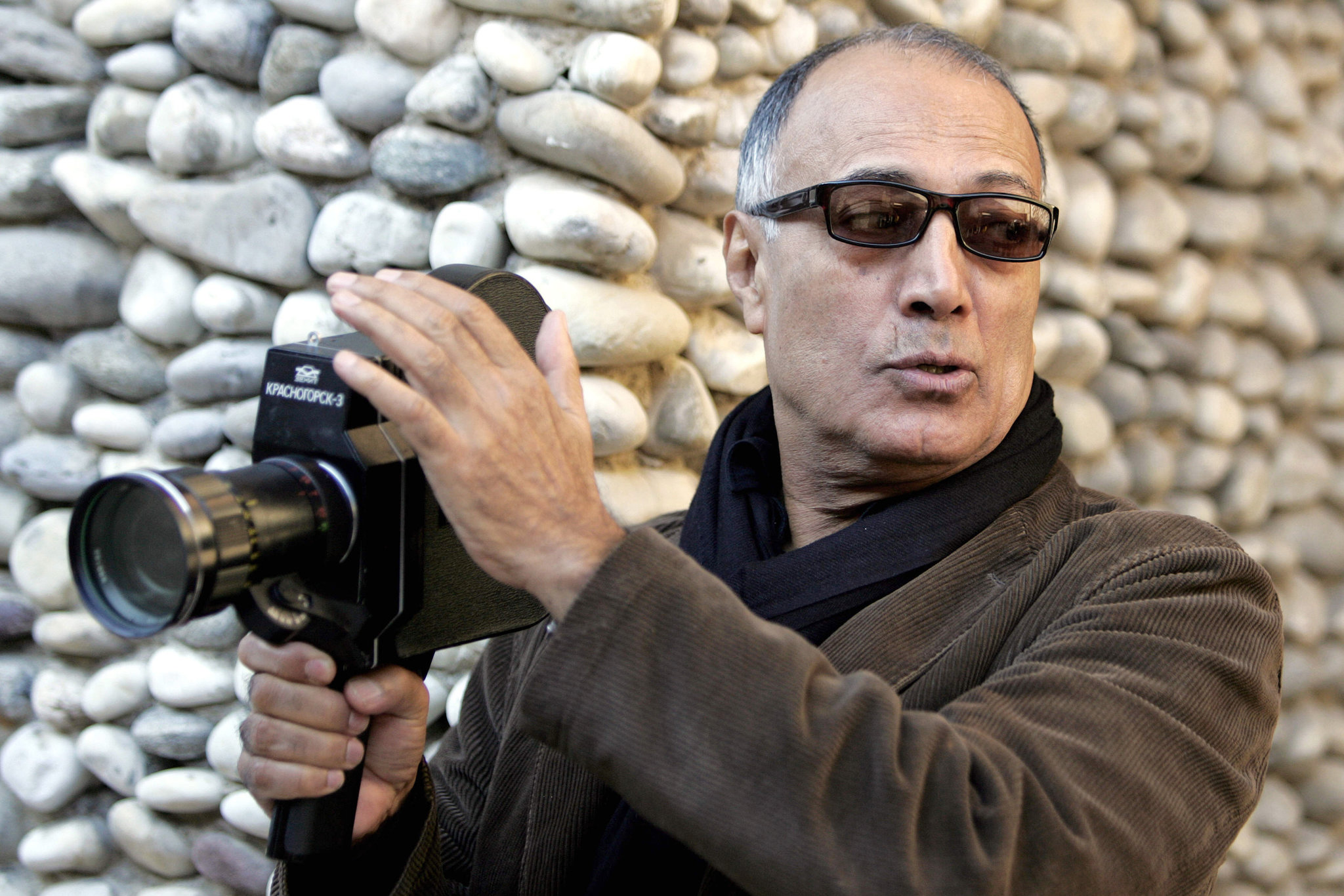
Abbas Kiarostami Did Not Make Films About Iran. He Made Films About the Human Condition Using Iran as His Instrument — and the Difference Between These Two Descriptions Is the Entire Meaning of the Word Auteur.
Kiarostami made twenty-four films between 1970 and 2016. They are set in specific places — the villages of northern Iran, the roads of Koker, the hills outside Tehran, the olive groves of Gilân — and they are about none of these places. They are about something that can only be accessed through the specific, the local, the particular, and that has no universal expression. They are about the relationship between human consciousness and the world it inhabits — and how cinema, uniquely among all art forms, can make that relationship visible.
The auteur theory, formulated by Truffaut and developed by the Cahiers du Cinéma critics in the 1950s, proposes that the greatest filmmakers express a personal vision across their work in the way that a novelist expresses a personal vision across their books — that the director is the author of their films and that the coherence of that authorship is visible across a career.
Most applications of this theory are made at the level of style — recurring visual motifs, characteristic narrative patterns, consistent thematic concerns. This is useful as far as it goes. It does not go far enough.
The deepest application of the auteur theory is not stylistic but philosophical. It identifies, in a filmmaker's body of work, a recurring question — the specific inquiry that the entire career is conducting, the thing the filmmaker does not know and keeps making films to find out. Style is in service of this inquiry. Narrative patterns are expressions of it. Thematic concerns circle it without resolving it.
For Kiarostami, the inquiry is this: what is the relationship between life and its representation? Between reality and the film of reality? Between the person and their image? Between what we see and what we understand? Between what happened and what the record of what happened contains?
Every film Kiarostami made is a version of this inquiry conducted through different formal strategies, different subjects, different levels of his career's development. Working through his filmography in order is the experience of watching a philosopher think — not arriving at conclusions but deepening the questions, finding new angles on a problem that cannot be resolved but can be more precisely posed.
The Koker Trilogy — the inquiry's foundation
Kiarostami made three films in the village of Koker in northern Iran that are the foundation of his mature work. Where Is the Friend's Home? (1987), And Life Goes On (1992), and Through the Olive Trees (1994).
Each film builds on the previous. Where Is the Friend's Home? is the simplest — a boy trying to return his classmate's notebook. It is also the most direct statement of Kiarostami's philosophical position: that simple actions in specific places contain the full moral weight of human life, and that cinema's capacity to observe those actions patiently is its primary ethical function.
And Life Goes On was made after the 1990 Gilan earthquake that killed 40,000 people in northern Iran, including in Koker where the previous film had been shot. Kiarostami returned to find the boy who had played the protagonist of Where Is the Friend's Home. The film he made about that search is a film about the relationship between the cinema that documents life and the life that continues after catastrophe — about the specific question of what a filmmaker owes to the people they have filmed and to the place they have filmed.
Through the Olive Trees closes the trilogy by making its construction visible — it is a film about the making of And Life Goes On, following an actor who is in love with the girl playing his wife in the film-within-the-film. In closing the trilogy by exposing its own making, Kiarostami asks explicitly the question he had been asking implicitly: what is the relationship between the film and the reality it claims to represent? Is the reconstruction more or less real than the original? Is the actor's real love for the girl more or less present in the film than the fictional love he is performing?
The middle period — the inquiry intensified
Taste of Cherry (1997) and The Wind Will Carry Us (1999) are the two films in which Kiarostami pushes his formal philosophy to its furthest extreme in the realistic mode.
Taste of Cherry — a man driving through the hills asking strangers to help him die — is built on the principle of maximum narrative withholding. We do not know why the man wants to die. We do not know if he does die. The film ends with a famous coda that appears to break its own reality, showing the film crew in the hills of Iran on a sunny day. The coda has generated more interpretive controversy than any ending in world cinema except 2001's. It is not a trick. It is the inquiry's most explicit statement: the film you have been watching is a film. The reality behind it is different from the film. What that reality is — whether the man lived, whether the act occurred, what the hills of Iran actually contain — is not available to you. Only the film is available. And the film knows this.
The late period — the inquiry's final form
Certified Copy (2010) and Like Someone in Love (2012) are the films Kiarostami made in Europe — in Italy and Japan respectively — after spending his career in Iran. They are the most formally radical films of his late period and the ones that most explicitly address the central question.
Certified Copy stars Juliette Binoche and William Shimell as characters whose relationship is unclear from the beginning — are they strangers who have just met, or a couple who have been together for years? The film allows both readings simultaneously, and the simultaneous availability of both readings is the point. Identity in human relationships — what we are to each other, what the history between us means, whether our understanding of a relationship corresponds to the relationship's reality — is not fixed. It is constructed, reconstructed, contested, and revised by both parties continuously. The film about a relationship is like a relationship — a copy of something that may or may not have an original.
What Kiarostami's career adds up to
Viewing Kiarostami's complete filmography — which can now be done largely on MUBI India and Criterion — produces the experience of watching a single, sustained philosophical inquiry conducted over forty-six years through twenty-four separate films.
The inquiry does not resolve. Kiarostami does not arrive at a conclusion about the relationship between life and its representation, between reality and cinema, between what we see and what we understand. He does not reach certainty. He reaches a more precise formulation of the uncertainty — a more complete understanding of why the question is unanswerable and why the impossibility of answering it is the most interesting thing about it.
This is what a great auteur career looks like. Not the development of a style. Not the elaboration of a theme. The conduct of an inquiry — across decades, through multiple forms, in the face of changing conditions — that deepens rather than resolves, that finds each answer producing a more interesting question, that ends not with the satisfaction of completion but with the specific kind of enrichment that comes from having spent time with a genuinely serious mind.
Kiarostami died in 2016. The inquiry is complete. Every film he made is available to anyone who wants to conduct it alongside him. That is what the auteur's body of work offers — not conclusions, but the company of a mind that spent its life thinking seriously about the most important questions it could find. In Kiarostami's case those questions turned out to be the questions at the heart of what cinema is. That is the reason to spend time with his work. Not to admire it. To think with it.
💬 Discussion
0 comments