These films didn't have stars, studios, or safety nets. What they had was more interesting. A data-driven portrait of the movies that returned the most per dollar ever spent — and the lessons every filmmaker needs to understand before they spend a single rupee.
The Right Question
Return on investment is a different question from raw box office performance. Avatar grossed $2.9 billion but cost $237 million to make. The Blair Witch Project returned more than four thousand times its budget. Which film was actually more profitable? That depends entirely on what you are trying to measure — and most box office coverage never asks the question.
ROI in cinema is calculated as worldwide gross divided by reported production budget. A film that costs $1 million and grosses $100 million has a 100x ROI. A film that costs $300 million and grosses $900 million has a 3x ROI. The second film made far more money in absolute terms. The first returned infinitely more per dollar spent. Neither measure alone tells the complete story.
"The films on this list were not made by people who had more money. They were made by people who understood something fundamental about what cinema actually is."
What follows is not a list of the highest-grossing independent films. It is a list of the most efficient — ranked by the ratio of what they earned to what they cost. The data reveals patterns that pure critical writing cannot see: about what genres work on micro-budgets, about what distribution strategies unlock audiences, about the specific conditions under which a $7,000 film becomes a $2 million film and a $60,000 film becomes a $248 million phenomenon.
We define independent here as films made without the direct financing of a major studio — productions that relied on private investors, credit cards, grants, deferred payment, or a filmmaker's savings. Several were later acquired and distributed by major studios; that does not change how they were made. The ROI figures are based on worldwide theatrical gross divided by reported production budget.
01. The Blair Witch Project (1999, dir. Daniel Myrick & Eduardo Sanchez)
Budget: $60,000 Gross: $248.6 million ROI: ~4,167x
The film that set the modern template for micro-budget horror marketing. Shot over eight days in Maryland woods with three actors improvising from an outline, Blair Witch cost less than a secondhand car. What it cost almost nothing on was production. What it spent its creative energy on was something no studio could replicate: an alternate reality marketing campaign in 1999, before anyone understood what that meant. The Sci-Fi Channel documentary, the missing students website, the posters at Sundance — all of it made before most filmmakers understood the internet existed as a distribution tool. By the time the film opened wide, audiences had been primed to believe it was real.
THE LESSON: Marketing is not separate from filmmaking. It is part of the film's total design. Blair Witch understood that the experience of watching begins long before the lights go down. The production budget was $60,000. The idea budget was infinite.
02. Paranormal Activity (2007, dir. Oren Peli)
Budget: $15,000 Gross: $193.4 million ROI: ~12,893x
Shot over seven days in director Oren Peli's own house with consumer-grade video cameras, Paranormal Activity sat on a shelf for two years before Paramount acquired it. The acquisition itself is a masterclass in distribution strategy: rather than dump it wide, Paramount ran a 'demand it' campaign — audiences in cities without screenings could text to bring the film to their town. The social proof mechanism turned a found footage horror film into a cultural event. The film eventually opened on 2,711 screens after the demand campaign created the appearance, and the reality, of national want.
THE LESSON: Scarcity and demand are tools. A film that everyone can see immediately is just another film. A film that people have to fight to see becomes a film people need to see. Distribution is a creative decision, not just a logistical one.
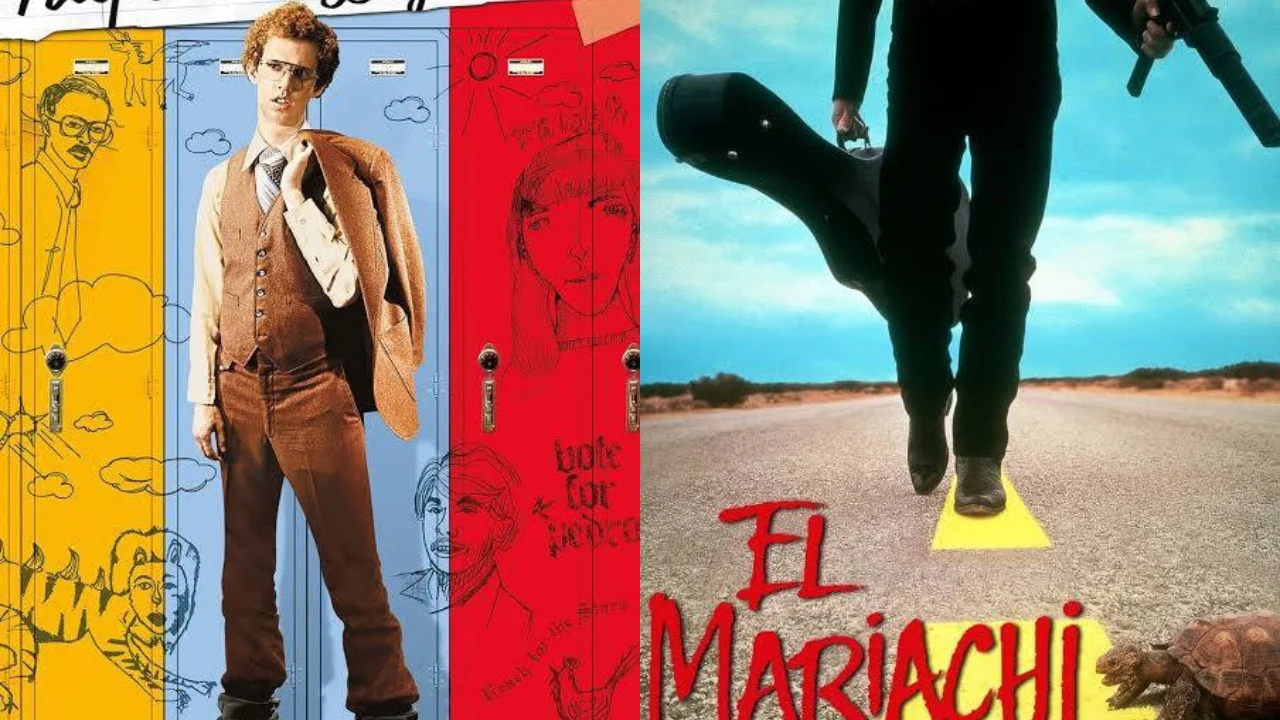
03. El Mariachi (1992, dir. Robert Rodriguez)
Budget: $7,225 Gross: $2 million+ ROI: Guinness World Record — lowest budget film to gross $1M
Robert Rodriguez was 23 years old when he enrolled himself in a paid medical research programme at a hospital in Austin, Texas. He spent the month of observation writing the script for El Mariachi and saved the $7,000 for the budget. He shot the film in Mexico in two weeks, doing his own camerawork, editing, sound, and production. Columbia Pictures executives saw it and acquired it for distribution, spending $200,000 on post-production. Rodriguez documented the entire production in his memoir Rebel Without a Crew — required reading for every filmmaker on earth.
THE LESSON: Constraints are not the enemy of creativity. They are its precondition. Rodriguez could not afford to make a conventional film. So he made a film in which his specific constraints became the film's specific texture. Limitation is a style choice when you're honest about it.
04. The Passion of the Christ (2004, dir. Mel Gibson)
Budget: $25 million Gross: $611.9 million ROI: ~24.5x
Every major studio passed on this film. The subject matter was considered uncommercial; the dialogue was in Aramaic and Latin. Gibson financed the budget personally, which focused every distribution decision with extraordinary clarity. The studio system had no mechanism for what followed: organised church groups block-booking theatres, pastors screening the film for congregations, a distribution network that bypassed Hollywood's conventional infrastructure entirely. The film became the highest-grossing R-rated film in history at the time of its release and the highest-grossing independent film ever made.
THE LESSON: The most valuable distribution network is one that already exists before you make the film. Gibson did not create a Christian audience. He made a film for one that was already there, already organised, and had never been spoken to directly by a major motion picture.
05. My Big Fat Greek Wedding (2002, dir. Joel Zwick)
Budget: $5 million Gross: $368.7 million ROI: ~73.7x
The film opened in 108 theatres with a marketing budget of just over $1 million. My Big Fat Greek Wedding did something that has never been precisely replicated: it kept growing. Every week, more screens. Every month, new audiences discovering it. It spent nearly a year in cinemas. FiveThirtyEight later identified it as the 'leggiest movie' of the previous 20 years — the highest ratio of total gross to its single best weekend of any film in that period. Word of mouth, the oldest distribution mechanism in cinema, at its absolute maximum efficiency.
THE LESSON: Speed is not always the measure of success. My Big Fat Greek Wedding earned $368 million by being patient — by finding its audience slowly, organically, community by community. Not every film needs an opening weekend. Some films need a year.
06. Get Out (2017, dir. Jordan Peele)
Budget: $4.5 million Gross: $255.4 million ROI: ~56.8x
Jordan Peele had made his name in sketch comedy. Universal's Blumhouse division gave him $4.5 million and final cut. What he made was a film that operated simultaneously as a horror movie, a social satire, and a piece of critical race theory that happened to be enormously entertaining. The film was nominated for four Academy Awards and won Peele the Oscar for Best Original Screenplay — the first African-American to win in that category. On an ROI basis, it outperformed every Marvel production ever made.
THE LESSON: Low-budget genre infrastructure is one of the most important mechanisms in independent film. Blumhouse's model — small budgets, profit participation for filmmakers, genre commitment — created the conditions for Get Out to exist. The business model and the artistic vision were not in conflict. They were the same decision.
07. Halloween (1978, dir. John Carpenter)
Budget: $325,000 Gross: $70 million+ ROI: ~215x
John Carpenter was offered the job on the condition he accept a $325,000 budget and a 20-day shoot. He solved the central problem — how to make an unstoppable killer frightening on no money — with a single formal decision: point-of-view. We see through Michael Myers's eyes. The mask was a William Shatner Star Trek mask, purchased for $1.98 from a costume shop and spray-painted white. Carpenter's score — five notes on a piano in 5/4 time — cost the price of his own labour. The film invented the grammar of the slasher genre.
THE LESSON: Every budget limitation has a creative solution specific to that limitation. The question is never 'how do we make the film we planned with less money.' The question is 'what film can only be made with this amount of money.' Those are different questions, and the second one is the right one.
08. Mad Max (1979, dir. George Miller)
Budget: $400,000 AUD Gross: $100 million ROI: ~250x
George Miller was a practicing emergency room physician when he made Mad Max. The film was shot on weekends over an extended period with a cast of unknowns and a crew of volunteers. The action sequences — including a 40-minute chase — were achieved through Miller's obsessive planning and the willingness of stunt performers to take extraordinary risks. The film launched Mel Gibson's career, initiated a franchise that culminated four decades later in Fury Road, and created an entire genre mythology on $400,000.
THE LESSON: Genre mythology does not require big budgets. It requires internal consistency. Mad Max's world felt complete and real because Miller had thought through every detail of its logic — not because he had money to realise those details lavishly.
09. Napoleon Dynamite (2004, dir. Jared Hess)
Budget: $400,000 Gross: $46.1 million ROI: ~115x
Napoleon Dynamite has no plot in any conventional sense. It is a character study of extreme social awkwardness in rural Idaho, with no antagonist, no romantic resolution, and no narrative momentum. What it has is tone — a specific, airless, deadpan atmosphere that was completely original. The film became a cultural phenomenon in the way that only genuinely specific films do: not because it appealed to everyone, but because it described something precisely enough that the people who recognised it became its most effective marketing force.
THE LESSON: Specificity is not a liability. It is the mechanism of cult audiences. A film trying to appeal to everyone appeals to no one with sufficient intensity. A film that describes one very particular thing with perfect accuracy creates passionate advocates who do the work of wide distribution through word of mouth.
10. Rocky (1976, dir. John G. Avildsen)
Budget: $1 million Gross: $225 million ROI: ~225x
Sylvester Stallone wrote the screenplay in three days after watching the Muhammad Ali-Chuck Wepner fight. He was offered $360,000 for the script on the condition he not star in it. He declined. The studios eventually agreed to his terms, capped the budget at $1 million, and shot in 28 days in Philadelphia. The film won the Academy Award for Best Picture — one of the lowest-budget films ever to do so.
THE LESSON: Holding the creative vision through the financial negotiation is itself a filmmaking skill. Stallone's refusal to sell the script without the starring role was an act of artistic integrity that happened to be the correct financial decision. He understood what the film needed to be, and he protected that understanding when the money wanted something different.
11. Saw (2004, dir. James Wan)
Budget: $1.2 million Gross: $103.9 million ROI: ~86.6x
James Wan and Leigh Whannell made the original Saw short film to pitch to producers. When Lions Gate acquired it, the budget was $1.2 million and the shoot was 18 days. Wan solved the budget problem with a single location: nearly the entire film takes place in one bathroom. The constraint produced the film's central formal conceit — two men chained to opposite walls, unable to leave. The franchise Saw generated spans twelve sequels and has earned over $1 billion in total.
THE LESSON: Location is a budget decision and a creative decision simultaneously. Committing to a single location forces the screenwriter to generate all drama from character rather than spectacle. The limitation produced a better film than money might have.
12. Clerks (1994, dir. Kevin Smith)
Budget: $27,575 Gross: $3.2 million ROI: ~116x
Kevin Smith worked at the Quick Stop convenience store where he shot the film, after hours, using the location without permission. He financed the budget through credit card debt — eleven cards, maxed out. Shot in black and white because colour stock was more expensive, in the store where he already had the keys. The Sundance premiere led to the Miramax acquisition. The film exists because Smith could not afford not to make it in the place where he already was, with the materials he already had.
THE LESSON: The best location for your first film is the one you already have access to. The best story for your first film is the one you already know from the inside. Smith made a film about the people he worked with, in the place he worked. The intimacy of that knowledge is what the film is.
13. Pi (1998, dir. Darren Aronofsky)
Budget: $60,000 Gross: $3.2 million ROI: ~53x
Aronofsky raised the $60,000 budget by asking 100 people he knew for $100 each. Shot on high-contrast black-and-white reversal film — the cheapest film stock that produced the most extreme aesthetic effect. The film's visual language of paranoia and mathematical hallucination was produced directly by its budget decisions. Pi won Aronofsky the Best Director award at Sundance and launched a career that produced Requiem for a Dream, The Wrestler, and Black Swan.
THE LESSON: Raising money from many small investors creates 100 invested advocates who tell everyone they know about the film. The financing structure was also the marketing infrastructure. The budget ceiling that forced every formal decision was the film's gift.
14. The Evil Dead (1981, dir. Sam Raimi)
Budget: $375,000 Gross: $29.4 million ROI: ~78x
Sam Raimi was 20 years old. He raised the budget from local Michigan dentists and small businessmen, shot in a genuinely remote Tennessee cabin over several brutal months, and emerged with a film that Stephen King called 'the most ferociously original horror film of the year.' Raimi's frantic camera style — the Evil Dead cam, that rushing ground-level point-of-view shot — was a budget solution. You could not afford to build proper dolly tracks. You strapped the camera to a two-by-four and ran.
THE LESSON: Technique invented to solve a budget problem frequently becomes a filmmaker's signature. Raimi ran with a camera on a board because he had no money for tracks. The technique defined him. The constraint became the style. This is one of the most important facts about low-budget filmmaking.
15. Night of the Living Dead (1968, dir. George Romero)
Budget: $114,000 Gross: $30 million+ ROI: ~263x
George Romero and his producing partners raised the $114,000 from local Pittsburgh businessmen — the same community-financing model that Aronofsky would rediscover thirty years later. The black-and-white photography was economic, not aesthetic. The film entered the public domain immediately on release due to a copyright error — which paradoxically accelerated its cultural penetration. Romero invented an entire genre — the zombie film as social allegory — on $114,000 in Pittsburgh.
THE LESSON: Distribution deals and legal structures around independent films require as much creative intelligence as the filmmaking itself. Romero's copyright error was a catastrophe financially and a gift to cinema culturally. The lesson is painful: protect your work with the same energy you put into making it.
16. She's Gotta Have It (1986, dir. Spike Lee)
Budget: $175,000 Gross: $7.1 million ROI: ~40x
Spike Lee's debut feature was shot in 12 days on $175,000 assembled from grants, family loans, and deferred payments. Lee submitted it to Cannes with no expectation of selection. It won the Prix de la Jeunesse for best first film. Its success at the box office established Lee as a major voice and opened the door for an entire generation of Black independent filmmakers who had been told there was no market for their work.
THE LESSON: Film festivals are not vanity exercises. They are distribution infrastructure. Lee's Cannes selection changed the film's trajectory entirely. For independent filmmakers, the festival circuit is not optional exposure. It is the mechanism by which distributors find films they would not otherwise find.
17. sex, lies, and videotape (1989, dir. Steven Soderbergh)
Budget: $1.2 million Gross: $36.7 million ROI: ~30.6x
Steven Soderbergh was 26 years old when sex, lies, and videotape won the Palme d'Or at Cannes. The film cost $1.2 million, was shot in Baton Rouge, Louisiana with actors who were not yet stars, and contained no action, no special effects, and no genre hook. Its entire engine was the quality of its dialogue and the precision of its character observation. The film is often cited as the moment that made modern American independent cinema — not the first great independent film, but the one that convinced investors that adult, dialogue-driven drama could compete at the box office.
THE LESSON: There is a specific difference between making a good film and making a film that creates market conditions for other films. Soderbergh's film did both. The Palme d'Or convinced investors that what he had made was worth money. The films that followed in its wake — a decade of adult independent drama — would not have been financed without that proof of concept.
18. Reservoir Dogs (1992, dir. Quentin Tarantino)
Budget: $1.2 million Gross: $2.8 million theatrical + home video millions ROI: Career-defining
Harvey Keitel saw the script, came on board as a producer, and the $1.2 million budget was secured. The film takes place almost entirely in one warehouse. Tarantino had written the script while working at Video Archives, the rental store where he had watched thousands of films. Every reference in the screenplay was a real reference, earned through genuine immersion in cinema history. Reservoir Dogs is the clearest example of what happens when someone has spent a decade learning from films before making one.
THE LESSON: The most important investment a filmmaker makes before their first film is time spent watching other films with analytical intention. Tarantino was not formally trained. He was self-educated in the most rigorous possible way. The budget limitation of one warehouse set could not have produced Reservoir Dogs without the ten years of cinema that preceded it.
19. A Quiet Place (2018, dir. John Krasinski)
Budget: $17 million Gross: $340.9 million ROI: ~20x
The central conceit — a world in which sound is lethal — demanded a director who understood that the audience's silence in the theatre was itself part of the film's experience. Krasinski solved the problem of depicting a deaf character authentically by working with deaf actress Millicent Simmonds, whose natural comfort with silence on set taught the entire production something about its own subject. The film's marketing was as formally disciplined as its direction: every trailer, every promotional event emphasised the silence.
THE LESSON: A film's formal conceit and its marketing strategy can be the same thing. A Quiet Place was marketed as an experience as much as a story. The silence was not just what the film was about. It was what attending the film required. That requirement was the film's most powerful selling point.
20. Everything Everywhere All at Once (2022, dir. Daniel Kwan & Daniel Scheinert (the Daniels))
Budget: $14.3 million Gross: $107.9 million ROI: ~7.5x
The lowest ROI on this list. Also the most important film on this list for what it says about the current moment in independent cinema. A24 produced Everything Everywhere All at Once for $14.3 million — a figure that would have been considered impossible for a film of its visual ambition twenty years ago. The film won seven Academy Awards including Best Picture — the most for any A24 production. Its success confirmed that the independent model had not merely survived the streaming era. It had found new formal ambition within it.
THE LESSON: The cost of making technically ambitious cinema has collapsed. Digital tools, affordable visual effects, and the infrastructure of companies like A24 have made it possible to produce films of genuine formal complexity at prices that would have been impossible a decade ago. The ceiling is not where it was.
What the Data Actually Shows
The twenty films on this list reveal four patterns so consistent they amount to structural laws of independent film finance. The numbers tell a story that individual film analysis cannot.
12 / 20 Horror or Thriller Horror's mechanics — suspense, dread, revelation — are generated by withholding information, not displaying spectacle. What you don't show costs nothing. | 14 / 20 Single or Few Locations Location costs — permits, transport, accommodation — are frequently the largest variable in an independent budget. Eliminating them changes the arithmetic completely. |
17 / 20 First or Second Feature Debut films have access to deferred payment deals, volunteer labour, and borrowed equipment that established productions cannot negotiate. | 15 / 20 Festival Premiere Critical Without the festival, the distributor does not see the film. Without the distributor, the film does not reach the audience. The festival is not optional. |
The horror dominance requires an explanation beyond 'horror is cheap.' Horror is cheap, yes. But horror is also the genre whose core effect — fear — is produced by the audience's imagination, not by what the screen shows. A door that might open. A sound from the wrong direction. A shape at the edge of the frame. These cost nothing to put on screen and can produce a physical response in the viewer that no amount of digital spectacle reliably produces. The grammar of horror is the grammar of withholding, and withholding is the most budget-efficient tool in cinema.
The single-location discipline appears again and again because it solves not just the budget problem but the screenwriting problem. A screenplay set in one location must generate all its drama from character — from what people say and do not say, from what they want and cannot have, from the pressure that builds between people who cannot leave. The films that emerge from that double constraint are frequently the most purely dramatic films of their generation.
The Three Models of Independent Finance
The twenty films on this list were financed by three distinct models, and understanding which model applies to which kind of project is one of the most important decisions a filmmaker makes before production begins.
1. The Personal Risk Model
Rodriguez's credit cards, Smith's eleven maxed cards, Tarantino's savings from Video Archives — works when the budget is genuinely micro and the filmmaker is willing to absorb the financial risk personally. The advantage is complete creative control. The disadvantage is that the filmmaker is personally liable for the debt. This model is viable for budgets under approximately $100,000 in current terms. Above that, the personal liability becomes genuinely dangerous.
2. The Community Investment Model
Aronofsky's 100 people at $100, Romero's Pittsburgh businessmen, Lee's family loans combined with grants — distributes the risk and creates an invested network of advocates. The 100 people who gave Aronofsky $100 each told everyone they knew about Pi. They were not just investors. They were the first wave of marketing. This model works best when the filmmaker has a genuine community that has reason to invest in their success.
"The Blumhouse model proved that genre infrastructure and artistic ambition are not in opposition. They are the same decision made at different levels of the production."
3. The Institutional Genre Model
Blumhouse's micro-budget horror infrastructure, A24's mid-budget art house pipeline — is the contemporary evolution of both previous models. These companies provide the financing, the distribution relationships, and the marketing infrastructure in exchange for a share of the profits. What they provide that the personal and community models cannot is scale. A Blumhouse film opens wide from day one. A credit card film does not.
The most instructive comparison on the entire list is between Paranormal Activity and Everything Everywhere All at Once — the first made for $15,000 with consumer cameras in a private home, the second made for $14.3 million through one of the most sophisticated independent studios in Hollywood. Both return on investment ratios are extraordinary. The thirty years between them saw the cost of making technically ambitious cinema collapse, the institutional infrastructure of independent distribution mature, and the audience for genuinely original filmmaking grow to a size that can support $100 million independent hits.
What This Means for Filmmakers Today
The data on this list contains a clear argument, and it is not the one that most discussions of low-budget filmmaking make. The argument is not 'you can make a film for any amount of money.' The argument is more specific: the constraint is generative. Every filmmaker on this list was forced, by the specific limitation of their budget, to make a creative decision that defined their film. Rodriguez could not afford extras, so he shot in Mexico where real people appeared in the background for nothing. Carpenter could not afford a complex monster, so he made a man in a mask the most frightening figure in American cinema. Romero could not afford colour stock, so he made a black-and-white film in which the monochrome heightened the horror.
The lesson is not that budget limitations are good. The lesson is that budget limitations, approached with intelligence and honesty, force exactly the kind of creative decisions that make films distinctive. The filmmaker who says 'if I had more money this film would be better' is frequently wrong. The filmmaker who says 'given this specific amount of money, what is the most interesting film I can make' is asking the right question.
What is available to a filmmaker with $50,000 today that Rodriguez did not have in 1992 with $7,000 is remarkable: digital cameras that capture images of genuine quality, editing software that runs on a laptop, sound recording equipment that fits in a backpack, streaming platforms that can reach a global audience without a theatrical release, and social media infrastructure that can build an audience before a film is made.
The films that will appear on a list like this in twenty years are being made right now, by people with phones and laptops and credit cards and one very specific story they need to tell. Some of those films will be horror films made in one location. Some will be comedies of extreme specificity about particular communities. Some will be formally audacious experiments in visual storytelling that no studio would have commissioned.
The most profitable independent films ever made were not made by people who had more money. They were made by people who had a more precise idea of what they needed.
Republic of Cinema · By The Numbers · Film Finance Series
💬 Discussion
0 comments